

You have just spent the morning at a famous landmark, your feet are tired, and your stomach is making its opinion very clear. Right outside the gates, every restaurant has a picture menu, a waiter calling you in, and prices that make you blink. You sit down anyway, because you are hungry — and half an hour later you are eating an average meal at a price you would never pay at home. It does not have to go that way. With a few simple habits, you can eat well, close to the sights, without paying tourist-trap prices.
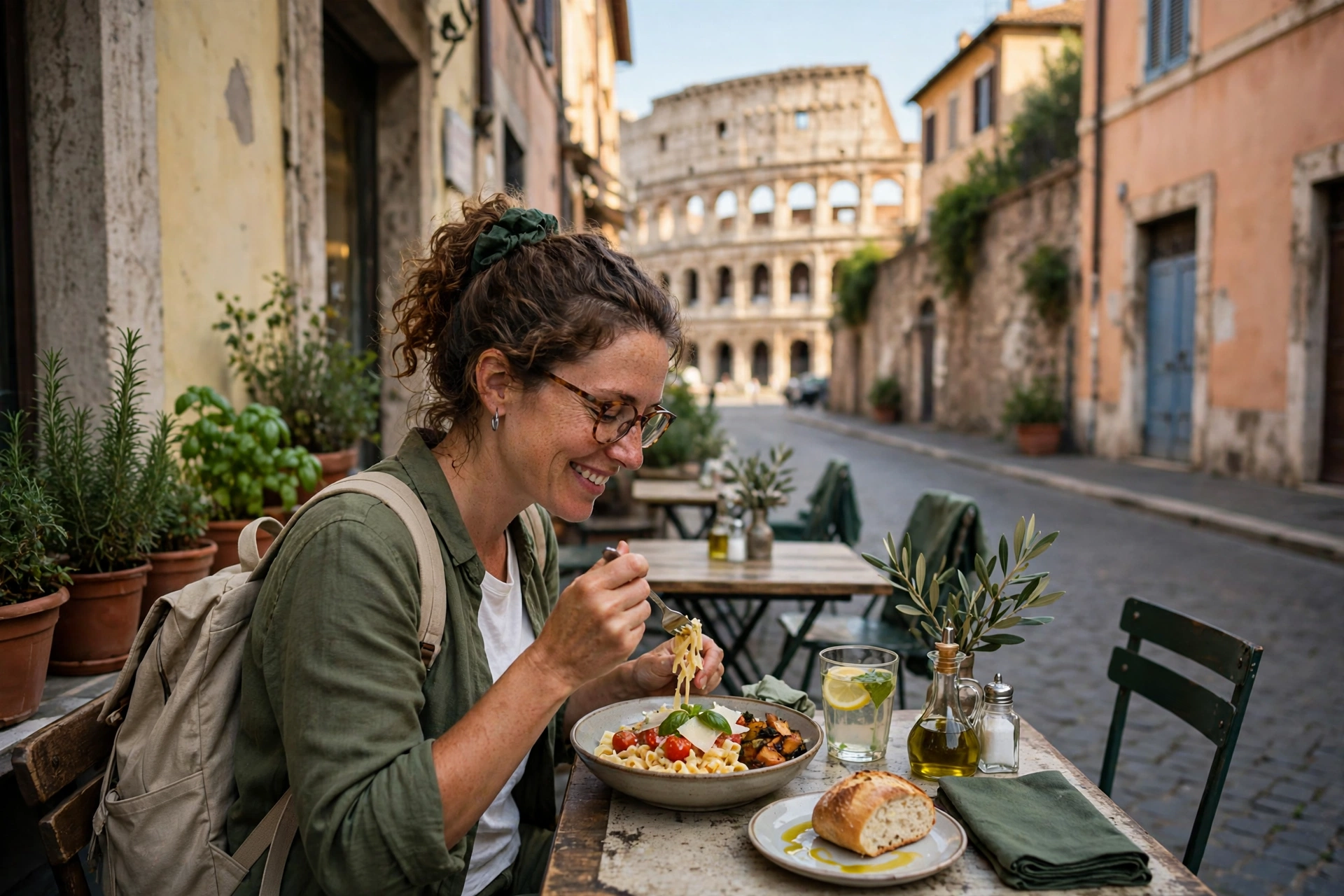
Why Food Costs More Near Famous Sights
Restaurants right beside a major attraction pay high rents, and most of their customers will never come back. That combination pushes prices up and, too often, pushes quality down: there is little reason to win repeat business from people who are only passing through.
Walk a short distance away and the economics change completely. A cafe two streets back relies on office workers, students, and neighbours who return every week. It has to keep prices fair and food good, or it loses its regulars. That is the single most useful thing to understand when you are hungry near a landmark — the best value is almost never at the front door.
The Two-Street Rule
When you finish sightseeing and feel hungry, resist the first row of restaurants. Walk two streets away from the attraction, in any direction, and then start looking. Ten minutes of walking usually takes you out of the highest-price zone and into streets where locals eat.
This works best if you plan for it. Before you leave your hotel, glance at a map and notice which streets sit just behind the attraction. Look for a bakery, a market hall, or a cluster of small cafes — signs that an area feeds its own residents. If you are travelling with children or older relatives, pick a spot before you set out so nobody has to walk around hungry while you search.
How to Spot a Tourist Trap Before You Sit Down
You can usually tell within a minute whether a restaurant is aimed at passing visitors or at regular customers. Watch for these signs:
- Picture menus in many languages with no local-language version. A menu written only for visitors is a warning sign.
- No prices shown, or prices only on a separate tourist menu. Always check the price before you order.
- Staff calling out to passers-by. Good local restaurants rarely need to pull people in off the street.
- A menu that tries to serve everything. A very long menu covering many cuisines often means little is cooked fresh.
- Empty tables at a busy time of day. If locals are not eating there at lunchtime, ask yourself why.
None of these signs alone proves a place is bad, but two or three together are a good reason to keep walking. Menus with inflated prices and surprise charges are also one of the oldest tricks aimed at visitors, so it helps to know how to avoid tourist scams in a new city before you travel — checking the menu and the bill first is a habit that saves money well beyond restaurants.
Find Where Locals Actually Eat
Once you are a couple of streets away from the attraction, look for the clues that locals use. A short queue of residents at lunchtime is a better recommendation than any glossy sign. So is a handwritten daily special, a menu that changes with the season, and a room full of people who clearly came from nearby workplaces.
Markets and food halls are often the best cheap eats near a busy sight. Stalls compete with each other, portions are visible before you buy, and you can try a small amount of several dishes instead of committing to one expensive meal. Bakeries, delis, and sandwich shops serve the same purpose: simple food, made for people who eat there every day.
Reviews can help, but read them the right way. Look at recent reviews that mention specific dishes, and at reviews written in the local language, rather than trusting an overall rating built on one-time visitor reviews.
Finally, ask people who are not selling you anything. Hotel staff, museum attendants, and shopkeepers usually know one or two affordable places within walking distance. Ask where they eat lunch themselves, not where tourists should eat — the answers are often very different.
Eat Well on a Small Budget
Eating cheaply near attractions is less about skipping meals and more about choosing the right meal at the right time. Lunch is often the best value of the day: many restaurants offer a set lunch menu or a smaller version of their evening dishes at a lower price. A filling lunch and a lighter evening snack can cost far less than two full restaurant dinners.
Street food, bakeries, and market stalls also stretch a budget without feeling like a compromise. Fresh bread, local cheese, fruit from a market, and a bottle of water make a perfectly good lunch, and you can eat it in a park with a better view than most restaurant terraces. If your accommodation has a kitchen or even a fridge, stocking breakfast basics there frees up money for one meal out each day that you genuinely enjoy.
Drinks deserve a quick check too. In many tourist-area restaurants, drinks add a surprising amount to the bill. Tap water is safe and normal in many cities, but not everywhere — check local guidance, and carry a reusable bottle where it is safe to refill.
Stay Safe While You Eat Cheap
Cheap should never mean careless. Choose stalls and cafes where food is cooked fresh in front of you, where turnover is high, and where basic hygiene looks cared for — clean surfaces, covered food, and staff who handle money and food separately. If a place looks dirty or the food has been sitting out for a long time, walk away, however low the price.
Keep the same caution with your bill as with your food. Check that you were charged for what you ordered, and question anything you do not recognize before you pay. Most mistakes are fixed quickly once pointed out.
A Simple Plan for Your First Day
Put it together and a day of sightseeing with good, affordable food looks like this: eat breakfast where you are staying. After the morning’s main sight, walk two streets away and look for a busy local cafe or market stall for lunch. Carry water and a snack in the afternoon so hunger never forces you into the first restaurant you see. For dinner, return to a place you spotted earlier — one with locals inside — rather than eating beside the evening’s attraction.
You will not get it right every time. Some meals will still be average, and some days you will simply be too tired to walk further. That is fine. The goal is not to eat as cheaply as humanly possible; it is to avoid paying premium prices for food you did not enjoy.
FAQ:
Is street food safe to eat near tourist attractions?
Often, yes — especially at stalls with high turnover, where food is cooked fresh in front of you and locals are queuing. Follow local health guidance for the city you are visiting.
How far do I need to walk to escape tourist prices?
Usually just a few minutes. Two streets away from a major attraction is a good rule of thumb, but in very busy areas you may need to walk a little further, toward residential streets or a local market.
Should I trust restaurant reviews when choosing where to eat?
Use them as one clue, not the whole answer. Recent reviews that name specific dishes, and reviews from local residents, are more useful than a high overall rating built on one-time visitor reviews.
Final Thoughts
Finding cheap eats near tourist attractions comes down to one habit: step away from the front door, look for where locals eat, and check the price before you sit down. Do that, and you will eat better food, spend less money, and remember the meal as part of the trip instead of a bill you would rather forget. The sights bring you to a city; the small cafe two streets away is often where you actually taste it.