
You step off the plane in a new country, and the first thing you need is local money — for the taxi, a bottle of water, the metro ticket. The exchange counter right in front of you looks convenient, and the rate on the board looks reasonable. But that single decision can quietly cost you more than your first meal abroad. The best way to exchange currency when traveling abroad is rarely the fastest or the most obvious one — here are the options that genuinely save you money, the traps to avoid, and a simple plan for every trip.
Start Before You Leave Home
The cheapest exchange often happens before you even pack. Order a small amount of your destination’s currency from your home bank — just enough for the first day: transport from the airport, a meal, a tip. That way you never have to exchange money while tired, jet-lagged, and in a hurry.
Next, check what your bank and card provider charge abroad. Some cards add a foreign transaction fee to every purchase, while others charge nothing, and some banks charge a flat fee for ATM withdrawals overseas. A quick look at your card’s fee schedule tells you which card is cheapest to use on the trip.
Also tell your bank you are traveling. A card suddenly used in another country can trigger a fraud block, and getting locked out of your money on day one is a problem no exchange rate can fix. Most banks let you set a travel notice in their app in under a minute. Pack a backup card from a different bank or network and keep it separate from your main wallet, so one lost or blocked card never leaves you stranded.
The Best Ways to Exchange Currency, Ranked
Not every way of getting local money costs the same. Here is how the common options compare, from best value to worst.
1. A local ATM at your destination. Withdrawing cash from a bank-owned ATM usually gives you a rate very close to the real mid-market rate — the rate banks use with each other. Your own bank may add a withdrawal fee, so one larger withdrawal is usually cheaper than several small ones.
2. Paying by card with no foreign transaction fee. For hotels, restaurants, and shops, a card that charges no foreign transaction fee is often the best deal of all — a fair rate automatically, and no piles of cash to carry. Just remember to always pay in the local currency when the terminal asks.
3. Your home bank before departure. Ordering currency from your own bank is convenient and safe, but the rate is usually a little worse than an ATM abroad, and banks often need a day or two to prepare the cash. It suits your arrival money, less so your whole trip budget.
4. Exchange counters in the city. Independent exchange offices away from tourist hotspots can be competitive if you compare two or three of them. Always ask exactly how much local currency you will receive before handing anything over.
5. Airport counters and hotel desks. These are the most convenient and usually the most expensive. They pay high rent for that prime spot, and the cost lands on you through a poor rate, a service fee, or both. Use them only for a small emergency amount, never for your full trip budget.
How to Use ATMs Abroad Without Losing Money
Use ATMs attached to a real bank, ideally inside a branch or in a well-lit public place, rather than standalone machines in tourist areas or convenience stores. Independent machines often add their own surcharge on top of your bank’s fee.
When the ATM asks whether you want the withdrawal converted into your home currency, always decline and choose the local currency. This offer — known as dynamic currency conversion — lets the ATM operator set the exchange rate, and that rate is almost always worse than your own bank’s.
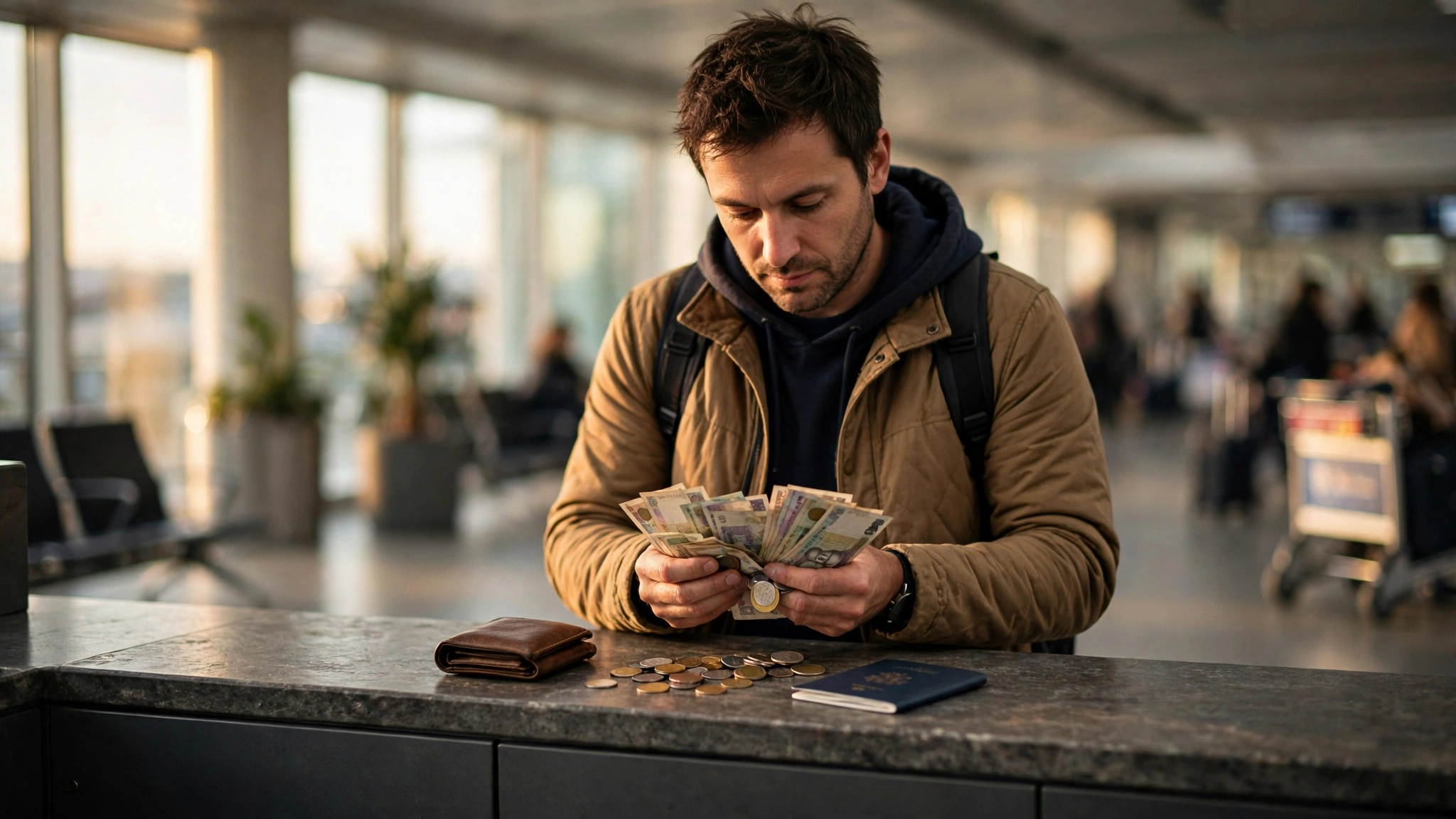
Withdraw a sensible amount in one go instead of many small withdrawals, because a flat fee per withdrawal adds up fast. But do not withdraw your entire trip budget at once either. Take what you need for a few days, check your bank’s daily withdrawal limit before you travel, and count your cash before you walk away.
Cards: What to Know Before You Tap or Swipe
Chip-and-PIN cards are standard in most of the world, and contactless payment is now common in cities across Europe, Asia, and the Middle East — but some places still run on cash only, especially small restaurants, markets, and rural areas. Carry both a card and cash.
When a card terminal offers to charge you in your home currency instead of the local one, decline it, just as you would at an ATM. Paying in the local currency lets your bank handle the conversion at a much better rate.
Keep one card in your hotel safe or in a separate pocket from your main wallet. If your wallet is lost or stolen, you will still have a working card while you sort things out. That simple habit is one of the easiest ways to keep your money and valuables safe while you travel.
How Much Cash Should You Carry?
Carry enough cash for a day or two of small spending — food, transport, tips — and rely on your card for everything else. Split your cash rather than keeping it all in one place: a day’s spending in your wallet, the rest in a separate pocket, a money belt, or the hotel safe. That way, losing one wallet does not mean losing your whole trip budget. Keep small notes and coins handy, too — large notes can be hard to break at small shops and market stalls, and taxi drivers in many countries genuinely do not carry change for big bills.
Spotting Currency Exchange Scams
Money changing attracts scams in every major tourist city, and most of them rely on rush, confusion, or a rate that looks too good to be true.
Be wary of anyone offering to exchange money on the street. The rate may sound unbeatable, but the notes can be counterfeit, old, or from a different country — and you will have no receipt and no one to complain to.
Watch out for “no commission” signs paired with a terrible rate. The commission is simply hidden in the exchange rate, so you still pay — you just cannot see it. Always work out how much local currency you will actually receive, and compare that figure across two or three places.
Count your money at the counter before you walk away. A common trick is to count the notes out correctly, then quickly take a few back while you are distracted. If the cashier rushes you or refuses to let you count, walk away. For more warning signs to watch for on the road, read our guide on how to avoid tourist scams in a new city.
FAQ: Exchanging Currency Abroad
Should I exchange money at the airport?
Only a small amount if you need cash immediately on arrival. Airport counters almost always offer a worse rate than a bank ATM in the city or your home bank before departure.
Is it better to use cash or a card abroad?
A mix of both. Use a card with no foreign transaction fee for hotels, restaurants, and larger purchases, and keep cash for markets, taxis, and tips.
Can I use US dollars everywhere?
No. A few countries accept US dollars alongside their own currency, but most do not, and the places that do usually give you a poor rate. Always pay in the local currency.
How do I know if an exchange rate is fair?
Check the mid-market rate for your currency pair on a reliable rate checker, and compare it with the rate you are offered. A small gap is normal; a large gap means you are overpaying.
Final Thoughts
The best way to exchange currency when traveling abroad is this combination: a little local cash ordered before you leave, a bank ATM on arrival for the rest, and a card with no foreign transaction fee for everyday spending. Avoid airport counters and hotel desks except in a pinch, always decline conversion into your home currency, and count your money before you walk away.