

You step off the plane, walk to the baggage carousel, and wait. Bags circle past, the belt slows down and stops, and the hall goes quiet. Your bag is not there. This guide walks you through that moment: what to do at the airport, how to report the bag, how to track it, and what to do while you wait.
The short version is reassuring: most bags that go missing are not truly lost. They usually arrive on a later flight or get misrouted to another airport, and airlines have a formal system for finding them.
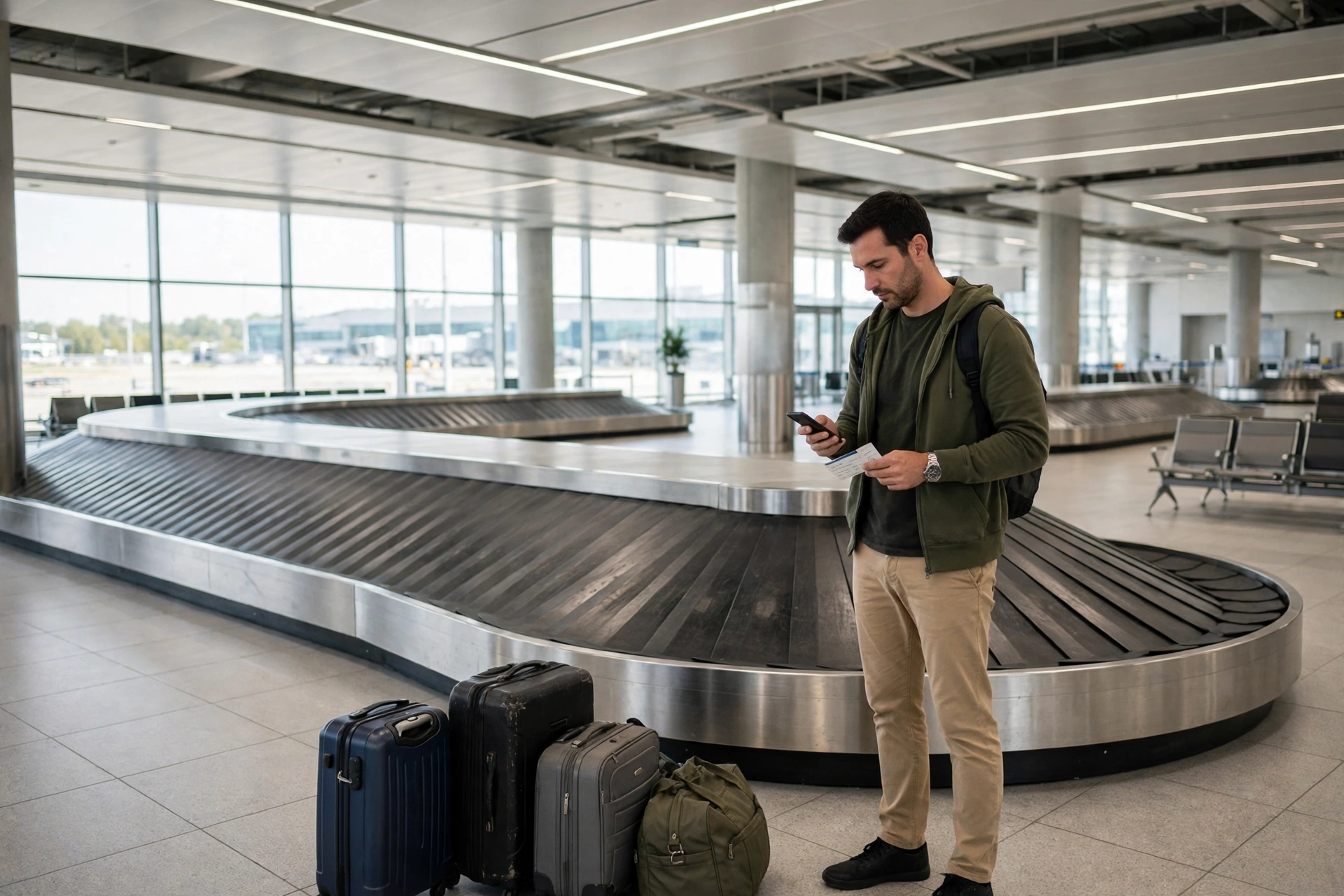
Stay Calm and Check Before You Panic
Before you report anything, rule out the simple explanations. Bags are sometimes sent to a different carousel, especially at large airports. Check the screens above each belt and confirm you are at the carousel for your flight number, and look at the oversized-luggage area, where large bags are often placed.
Also check your phone. Some airlines send a notification when a bag is delayed, and a tracker in your suitcase may already tell you where the bag is. That information is useful when you speak to the airline — but you still need to file a formal report at the airport.
If the belt has stopped and your bag is nowhere to be seen, it is time to act. Do not leave the airport first and report it later from your hotel — filing the report on the spot is the single most important thing you can do.
Report It at the Airport Before You Leave
Head to your airline’s baggage service office, usually located right in or beside the arrivals hall near the carousels. If you cannot find it, ask any airline staff member or the information desk to point you there.
At the desk, the agent will open a Property Irregularity Report, often called a PIR. This is the official record of your missing bag, and everything that follows — the search, the delivery, and any compensation claim — depends on it. Describe your bag clearly: its colour, size, brand, and anything that makes it easy to recognise, such as a ribbon or a distinctive tag. A photo of your bag on your phone helps enormously here.
Have your boarding pass and the baggage claim tag ready. The claim tag is the small sticker the check-in agent gave you, and it carries the barcode number the airline uses to trace your bag. The agent will give you a file reference number — write it down and keep it safe, along with the phone number of the baggage office.
What Information the Airline Needs From You
The agent will ask for your flight details, your contact number, and the address where you are staying, because the airline will usually deliver the bag to you rather than asking you to return to the airport. Give a local phone number if you have one, and make sure your email address is correct, since most status updates arrive by email or text.
You will also be asked what was inside the bag. This helps the airline identify your bag if the tag has come off, and it matters later if you claim for the contents. List the valuable and distinctive items honestly. If your bag contained medication or anything you need urgently, say so clearly; airlines sometimes prioritise those cases.
Before you leave the desk, confirm your file reference number, the expected time frame for the next update, and whether there is an online page where you can follow the search yourself.
Track Your Bag and Stay in Touch
Most major airlines now let you track a delayed bag online with your file reference number, and many have a tracking feature in their app. Check it once or twice a day rather than constantly refreshing it — the status changes only when the bag is scanned at a new point in the system.
If nothing has changed after 24 hours, call the baggage office and quote your file reference number. Stay polite but persistent; the agents handle hundreds of cases, and a calm, clear caller is easier to help. Ask specifically whether the bag has been located and when delivery is planned.
Keep every receipt, email, and reference number from this point on. If you buy essentials while you wait, keep those receipts too — they are the basis of any expenses claim later.
What Happens Next: Delivery, Deadlines and Compensation
In most cases your bag turns up within one to three days and is delivered to your hotel or home address free of charge. Confirm the address again if you move to a different hotel during your stay.
If the bag has still not appeared after several days, the airline will normally treat it as lost rather than delayed. The exact point varies by airline and by route, and the compensation rules differ too. The US Department of Transportation explains the baggage rules that apply to flights to and from the United States, including liability limits, at transportation.gov/airconsumer/baggage. Check your airline’s own lost-baggage policy as well, and read the conditions of your travel insurance, which often covers delayed baggage separately.
When you make a claim, you will need your file reference number, the baggage claim tag, your boarding pass, and receipts for anything you bought to replace essentials. Claims have deadlines, so file the claim as soon as the airline confirms the bag is lost, and keep copies of everything you submit.
What to Do While You Wait
A missing bag is inconvenient, but it does not have to ruin the first days of your trip. Buy the essentials first: a change of clothes, toiletries, and any medication you need. Many airlines offer a small allowance or a toiletries kit for delayed baggage, so ask the baggage desk before you spend your own money. Keep the spending reasonable and keep every receipt — reimbursement usually covers essentials, not a full replacement wardrobe.
How to Make Lost Luggage Less Painful Next Time
You cannot guarantee a bag will never go missing, but you can make the experience far less painful. The single best habit is to keep your essentials in your carry-on: medication, a change of clothes, chargers, and toiletries. See our guide on how to pack a carry-on for a week-long trip shows how to fit a surprising amount into one small bag, and the same packing approach means a delayed suitcase becomes an inconvenience instead of a crisis.
Keep valuables out of checked luggage altogether. Laptops, cameras, jewellery, and important documents belong in your hand luggage, because they are harder to replace and airlines limit their liability for them. Our guide on how to keep valuables safe while backpacking covers the same habits for any kind of trip: carry the irreplaceable things on your person.
Finally, take a photo of your bag before you hand it over, and put a luggage tag with your name and phone number inside the bag as well as outside. If the outside tag tears off, the inside tag is what gets your bag home. A small tracking device is also worth considering — it will not prevent a delay, but it tells you where the bag is.
FAQ
How long does it take for lost luggage to be found?
Most delayed bags are located within 24 to 72 hours and delivered to the passenger. If a bag has not been found after about five days, most airlines begin treating it as lost, though the exact timeline varies by airline.
Will the airline pay for clothes I buy while my bag is missing?
Most airlines reimburse reasonable spending on essential items while a bag is delayed. Keep all receipts and file the claim with your file reference number.
Should I leave the airport without filing a report?
No. Always file the report at the airport before you leave. The report starts the official search, and filing later can slow the process and complicate any compensation claim.
Final Thoughts
Losing a bag at the airport is stressful, but it is a problem with a clear process and a good ending in most cases. Report it before you leave the airport, keep your reference number safe, and spend only on the essentials while you wait. And on your next trip, pack the irreplaceable things in your carry-on and photograph your bag before check-in.